
Q&A with Nicola Whyte on Writers & Artists
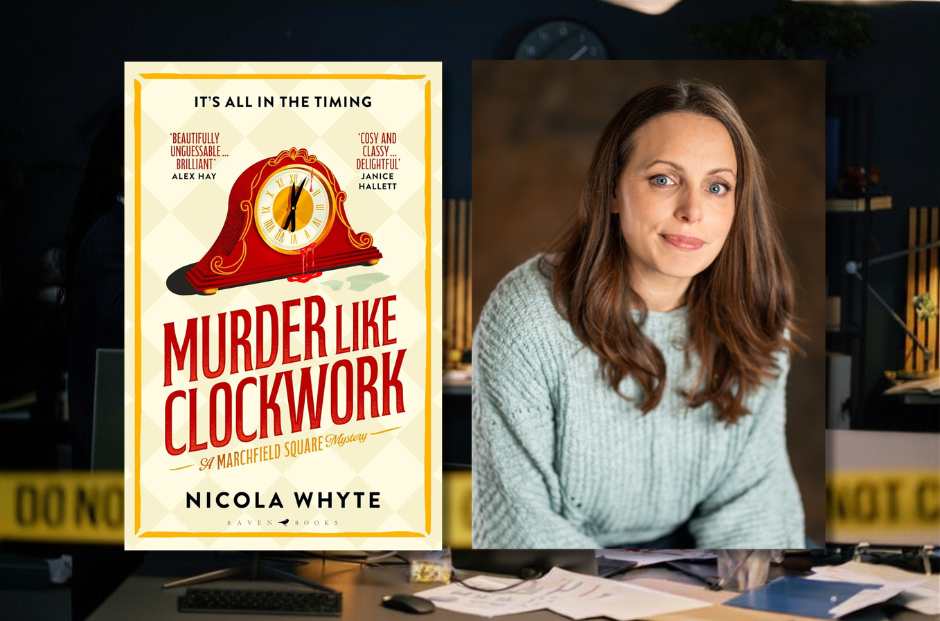 An interview with Nicola Whyte on writersandartists.co.uk about her new Marchfield Square mystery, Murder Like Clockwork, a locked room mystery featuring a vanishing victim and a disappearing crime scene.
1. Murder Like Clockwork is the second Marchfield Square mystery. Was it the location, the characters, or the concept that first came to you when writing this series?
It was sort of all three at once. I’d had the idea for a small, quirky community coming together to solve a murder back when I was a teenager, but it had never properly taken root, although it had reared its head several times since then. Then one day, well over a decade ago, I was walking down St James’s Street in London and noticed a little passageway called Pickering Place. I looked it up on the train home and it was described as ‘the smallest residential square in London’ and that immediately brought everything together in my mind. The location, the community, how they’d been brought together… the only thing missing was a plot. That came together very slowly over a few years until the idea suddenly became one I couldn’t ignore any longer, and I sat down and started writing, at which point I realised I’d half-known it all along.
2. How did you find the process of writing the second book? Were there any challenges you hadn’t anticipated?
After so many years writing just for myself, I knew that feedback from readers, good or bad, would get in my head, so I made a concerted effort to write Murder Like Clockwork before any early reviews for 10 Marchfield Square came in. I’d completed eight novels at that point, and wanted to be sure I’d written the second book in the same way as the first, so I put my head down and let the story carry me on quite feverishly. After it was done, however, I realised the story was a howdunnit as much as a whodunnit, which created an additional editorial challenge, so I had to do a lot more work on the structure, which probably stressed my editor out too (not that she let on). It definitely made the second novel more complex, and I still feel quite anxious about it. I am glad I was able to write it early though. I could never have anticipated how much headspace that first publication year would take up, and I would have struggled if I’d left it too long.
3. Audrey Brooks is a great unlikely detective for a main character! What advice would you give writers who are wanting to create a unique, authentic main character in this genre?
Having a theatre background, I do a lot of character work through dialogue. With Audrey and Lewis, they don’t like each other to begin with, and so neither feels any need to disguise their true selves, and I had a great time exploring that through their conversations. Audrey self-edits around her flatmate and the other residents in a way she doesn’t around Lewis, which meant I got to know her better and more fully through her interactions with him. By giving them the freedom to be honest with each other, it allowed me to discover their quirks, irritations, and vulnerabilities while also working out how and why they would shield those things from other people. That allowed me to build up the layers to create authentic characters.
Taking a trope and subverting it can also be a great way to do something a bit different with character. I had great fun setting up some Golden Age-style archetypes and then letting them confound the other characters by revealing something unexpected. Often, the unexpected thing surprised me too, which was a brilliant place to be for further character development.
Read the full interview with Nicola on writersandartists.co.uk.